
Rehearsal Diaries 2026
Behind the scenes as we bring Verdi’s La Traviata to the stage.
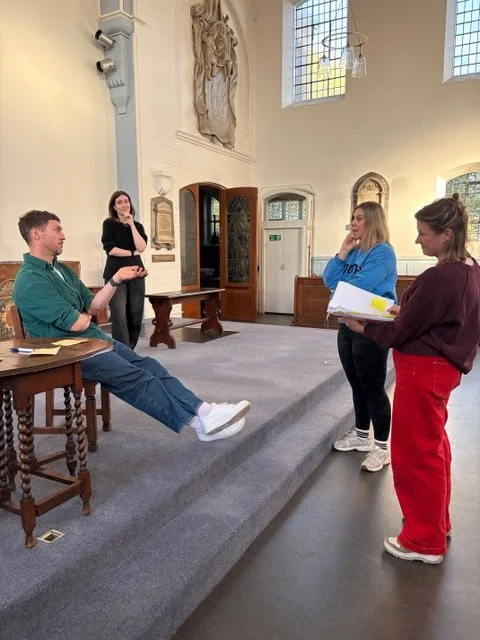
It is a gloriously warm and sunny evening in south London as VIP supporters and invitees arrive at the church, here to see internationally renowned tenor and patron of St Paul’s Opera, David Butt Philip, help the company in rehearsal of La Traviata.
The full cast is here, with one or two exceptions. Chorus members and supporting cast are wearing their black mantilla lace headdresses, ready to go with the songs of the gypsy girls and matadors in Act II, Scene II. The piano begins and the chorus processes, as, on stage, the matador (Salome Siu, mezzo-soprano) dances with stand-in gypsy maiden Daisie Sitlani (actually the 2nd Assistant Director). The action continues, through to Alfredo’s humiliating denunciation of Violetta, when Eddie, the director, halts the rehearsal.
Germont (Owain Gwynfryn, baritone), she says, should be on the stage at this time, not on its apron, and Owain moves. His character has acquired a walking stick (actually a rolled-up umbrella) and a limp since yesterday. There is some repositioning of other chorus members. They go again. David Butt Philip is at the piano with the Assistant Music Director, Blanca García Rodríguez, who is both playing and conducting the chorus. The action runs through to the end of Act II and a fifteen-minute break is called.
More guests and supporters are now in the church pews and it’s warm; fans are fluttered, wine is dispensed and there is a fine flow of chat. Eddie is in discussion with the Assistant Director, Patricia Gomez, and the stage furniture is slightly altered for Act III. David talks with Blanca and with Lizzie (Ryder, soprano, Violetta).
It’s back to work and Act III, as the doctor (sung by an off-stage Owain Gwynfryn, in Thomas Rayner’s absence) tells Violetta that she is not long for this world. She is reunited with Alfredo and the now-regretful Germont comes to seek her forgiveness, but it’s all too late and, after much moving singing, she dies. Unlike other productions I have seen, she doesn’t do so in Alfredo’s arms, but very dramatically at the front of the stage. The small audience applauds.
Now David sits with the principals and Eddie, discussing the final act. He talks with Lizzie about rhythm and with Christian (Joel, tenor, Alfredo) about interpretation.
‘Don’t do a generic long note–short note. Use the notes to deliver more.’
As dusk falls, we leave them, still working.
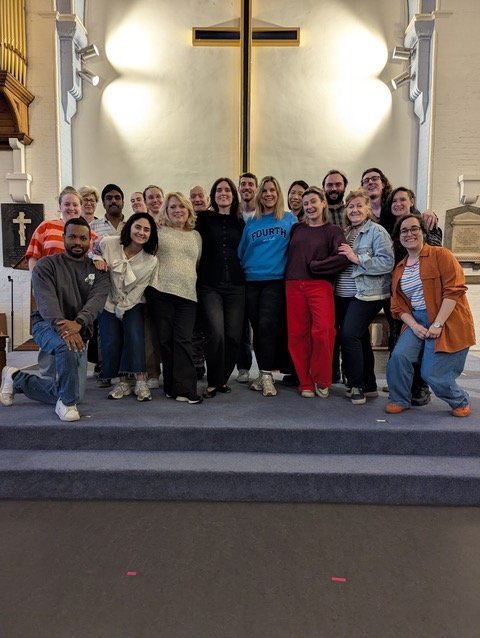
The early evening sun pierces the windows above the gallery of the old church, bathing the altar space and front pews in light. The cast of La Traviata gather for rehearsal.
‘I won’t be home until ten,’ Llewellyn (Doctor) grumbles to Christian (Alfredo) as they stow their gear. ‘It’ll be half past ten for me,’ Christian replies.
It is England’s first appearance at the World Cup later tonight and most of the live game will be missed.
They join the rest of the cast for a warm-up at the front of the church, the ‘stage’. Edwina ‘Eddie’ Strobl, the director, leads the routine — stretching, shaking, breathing and voice exercises. She addresses the cast, saying that they, as individuals, haven’t all been together at rehearsals very much. So, thus far, people have been creating beautiful jigsaw pieces and now those pieces need to be brought together to create the overall picture. With three weeks to go, everyone needs to bring their ‘A’ game, full concentration and focus to every part of the rehearsal. Tonight they will run through the whole opera. There is applause as they break.
At the piano, Blanca García Rodríguez now leads the chorus through what one of them calls ‘the sick bucket piece’, first by having them all speak the words in unison, to the rhythm, then with the piano. She focuses on clarity and the build to the crescendo.
‘More!’ she cries, as they sing it and the church resounds to the chorus, loud and full-voiced. At its conclusion there is a moment’s silence, then more spontaneous applause. Everyone is energized, humming and singing to themselves. All are ready to go.
‘Positions, please!’ Eddie calls, as she draws her much-annotated score from her bag.
The overture’s themes ring out and a piece of timeslip staging takes place (no spoilers here). Then Act I, Scene I. Our heroine appears on stage (Lizzie Ryder, soprano) obviously ill and trying to hide it. The Barone (Ted Day, baritone) brings her a necklace, which cheers her, and they smooch as the guests arrive for the party. Gaston (Narveen Kanamarlapudi, tenor) is accompanied by his friend, the somewhat reticent Alfredo, and much singing and stage-drinking is done, including the famous brindisi. Violetta collapses and retires. Alfredo goes to check on her. Following their aria, Eddie halts proceedings.
The relative stage positions of the protagonists aren’t right and their interaction needs to improve. Alfredo is to be ‘more shy’. They repeat. Eddie has more notes.
They proceed until the chorus returns to the stage to sing the piece practised at the beginning of the evening. This observer now understands what was meant by ‘the sick bucket’ description. Eddie has notes — the entrance and exit of the chorus needs work, as does the main activity, in which the timing was wrong.
‘You’ve got more time,’ Eddie instructs Owain Gwynfryn, baritone, who plays Germont, but is part of the chorus for this scene. They go again. ‘More pain!’ The chorus duly responds. They knock it out of the park.
Thence to Violetta, after everyone has left, contemplating what might, yet cannot, be — ‘É strano…sempre libera’ — as Alfredo’s voice is heard, off stage. It’s the end of Act I and, again, there is applause.
‘Tea break!’ Eddie calls. ‘Fifteen short minutes.’
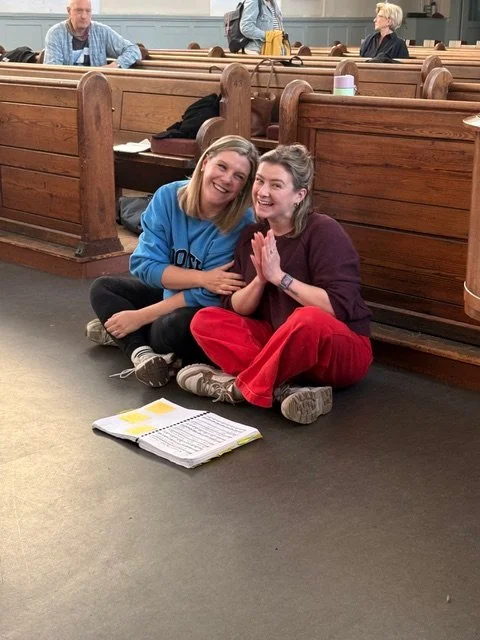
It is early evening on a cold and blustery day and the principals of St Paul’s Opera 2026 production of Verdi’s La Traviata are gathered for a special rehearsal. Tonight they are joined by Alison Langer, celebrated soprano and interpreter of the role of Violetta in that same opera for Opera Holland Park in 2025.
Ali talks about the psychology of the character with director, Edwina Strobl and SPO’s Violetta, Lizzie Ryder. They discuss the end of Act One, when Violetta, finding herself alone, muses on the possibility of real love, which Alfredo has awoken in her, but dismisses it as something which she cannot aspire to. Her lot is, at best, to be free. ‘E strano…Sempre libera’.
This is one of the few parts of the opera when Violetta is not on show, to her lovers, admirers, friends or Alfredo. Ali points out how unusual it is for this character to talk about herself and how she feels real rage at the constraints laid upon her, even while she is ‘free’. Lizzie had already decided to smash Violetta’s hand mirror during this piece and she runs through it, several times, to perfect it, the fracturing of the character’s own reflected image by the arrival of love in the courtesan’s life. Ali adds suggestions.
They talk too about Violetta’s final farewell to Alfredo at the close of the opera, Ali saying that, when she filled the role, she thought a lot about people’s wishes at the end of life. This dovetails, neatly, with Violetta’s holding on until she tells Alfredo that she loves him and he must live a full life after she has gone. There is also a lightening of heart for Violetta, as the pain begins to lift and she senses the release to come. The trick, of course, is to show this in the performance. As Ali says, take care not to weep, it’ll wreck your breathing.
Playing a consumptive character and singing presents its own problems, the music itself sometimes has a breathless quality, but a heaving breast gasping for breath is OTT. Ali suggests Lizzie might occasionally touch her chest to indicate tightness or pain and reach for physical support, a chair, a table, to indicate physical weakness.
They proceed to consider the duet between Violetta and Germont, Alfredo’s father, sung by Welsh baritone, Owain Gwynfryn, in Act 2. The psychology of their interchanges should inform the performance, as each is, as Ali puts it, shocked by the other. Germont is a male interloper in this female household, he sits, manspreading, taking up more space, his rudeness setting the maids atwitter. Violetta refuses to allow this, saying she will leave. Her grace and nobility at showing him his son’s letter, impress Germont, despite himself. There is stage business about portraying all of this, during which Gwynfryn’s physical presence is made more imposing and Ryder’s positioning more subtle, while the servants react to the man’s insulting behaviour.
‘You don’t need to look at her. When you’re singing, just look to the side.’
So, he doesn’t (until he does) and the scene is more powerful for it.
N.B. Alison Langer is appearing at Opera Holland Park this summer as Rosalinde in Die Fledermaus by Johann Strauss.